Official Colors
Design Breakdown
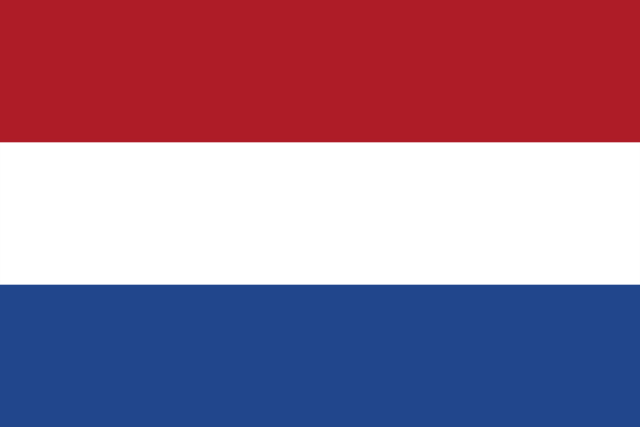
Three equal horizontal bands of red, white, and blue form the Dutch flag. Identical in layout to the French tricolour rotated 90°, the Dutch flag is often distinguished by its deeper, darker blue.
The flag is officially 2:3 in proportion. On the Dutch Liberation Day (5 May), an orange streamer is traditionally attached to the flag in memory of the House of Orange-Nassau.
History & Symbolism
The Dutch tricolour evolved from the Prinsenvlag (Prince's Flag) used by William of Orange during the Dutch Revolt (1572). The original was orange, white, and blue — orange representing the House of Orange. Over time, orange dye faded or was substituted for red, and by the early 17th century red predominated.
A 1937 royal decree formally fixed the colours as red, white, and blue, ending decades of inconsistency between orange and red versions. The Dutch flag influenced France's tricolour and countless other flags worldwide, making it one of the most historically significant designs.